

Last updated on June 9th, 2026 at 10:08 am
Why Cable Damage Costs More Than You Think
Cables are the nervous system of modern industrial operations. In robotics, aerospace, automated manufacturing, and public utilities, a single damaged cable can halt an entire production line.
The causes are rarely dramatic. Most cable failures come from everyday wear — friction against a machine frame, a bend that’s too tight, or a chemical splash that slowly degrades insulation over months.
And the consequences can be serious. In documented rail incidents, rodents chewing through signaling cables caused a train collision injuring 40 people in France, and a single rat triggered 12 hours of service disruption in Ireland. While those are infrastructure examples, the principle holds across industries: unprotected cables fail, and failure has a cost.
Prevent cable damage, and you prevent one of the most common — and costly — sources of industrial downtime.
Here’s a quick overview of the most effective ways to do it:
| Method | Best For |
|---|---|
| Heli-Tube® spiral cable wrap | Abrasion, bundling, wire breakouts |
| Armored or shielded cables | Rodent damage, mechanical impact |
| Proper bend radius and routing | Repetitive motion, conductor fatigue |
| Chemical-resistant materials (PTFE, Nylon) | Solvent, moisture, UV exposure |
| Regular inspection and maintenance | Early detection of wear |
| Circuit protection (fuses, breakers) | Electrical overload |
This guide covers the full picture — from what causes cables to break, to the materials and methods that keep them running longer.
Common Causes of Industrial Cable Failure
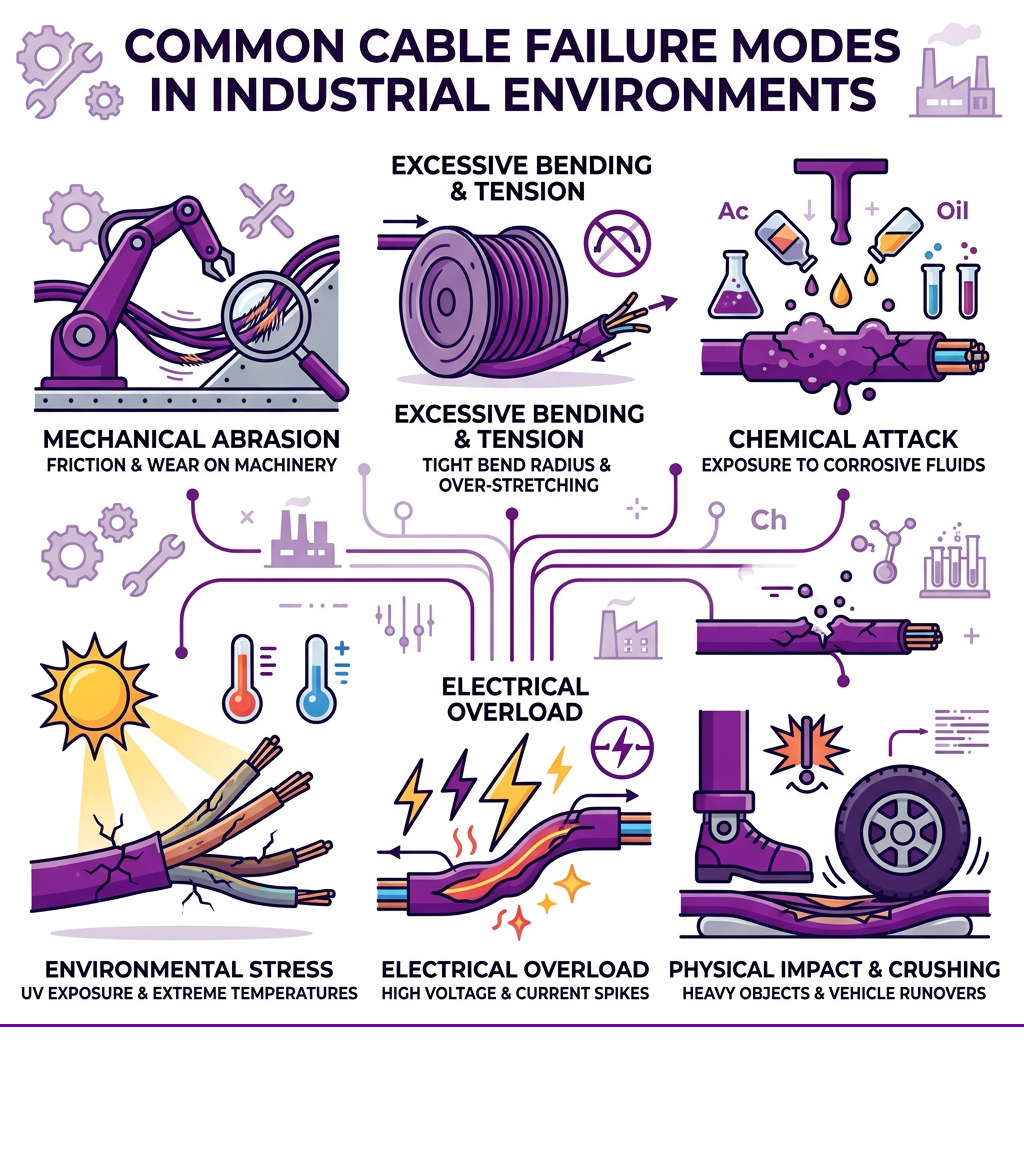
In an industrial setting, cables are rarely sitting still in a climate-controlled room. They are pulled through conduits, bent around robotic joints, and exposed to the grit of the factory floor. Understanding why they fail is the first step toward a strategy to prevent cable damage.

Physical Wear and Abrasion
Abrasion is perhaps the most persistent enemy of cable integrity. It occurs when a cable rubs against a rough surface, sharp edges of machinery, or even other cables within a bundle. Over time, this constant friction thins the outer jacket, eventually exposing the primary insulation or the conductors themselves. Once the conductors are exposed, you are looking at short circuits, intermittent signals, or total system failure.
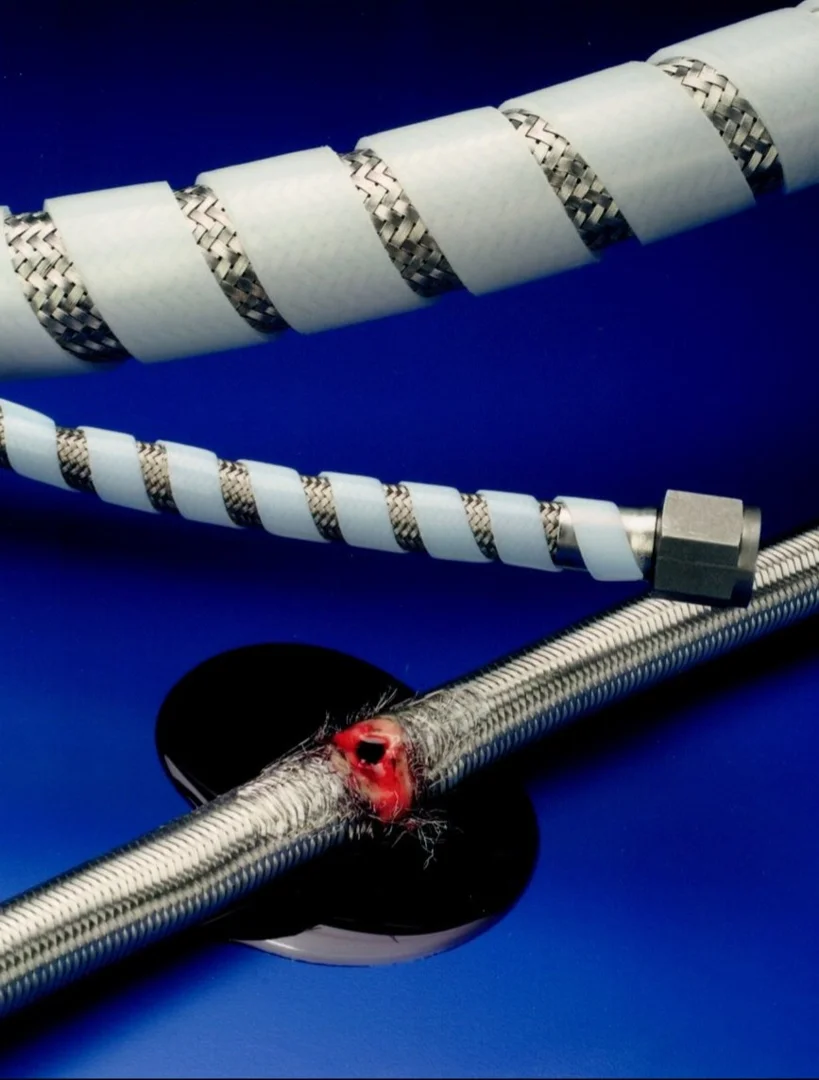
To combat this, how spiral wrap is used for abrasion protection becomes a critical topic for maintenance teams. By applying a sacrificial protective layer, friction occurs on the wrap rather than on the cable jacket. This is especially vital in automated manufacturing, where machine parts move in repetitive cycles thousands of times per day.
Mechanical stress also plays a role. If a cable is installed with excessive tension or pinched by a mounting bracket, the internal copper strands can stretch or snap. While the outside might look fine, the internal “nervous system” is compromised.
Environmental Hazards and Chemical Exposure
Not all damage is mechanical. In industries such as aerospace and marine manufacturing, cables often contend with a cocktail of environmental stressors.
- Chemical Exposure: Oils, solvents, and cleaning agents can cause standard PVC jackets to swell, soften, or become brittle. Once the jacket integrity is gone, moisture can seep in, leading to corrosion.
- UV Degradation: For outdoor applications or public utilities, sunlight is a constant threat. UV rays break down the molecular bonds in many plastics, causing them to crack.
- Temperature Extremes: High heat can melt insulation, while extreme cold makes jackets so brittle they shatter upon the slightest movement.
- Rodent Damage: It sounds like a minor nuisance until it stops a train. As noted in reports of travel misery for thousands of rail passengers, rodents have a biological need to gnaw. Their teeth can easily slice through standard insulation, leading to the catastrophic failures mentioned in the introduction.
Using high-performance materials like PTFE or Nylon is the standard way to mitigate these risks. For instance, many engineers choose to protect instrument wires with PTFE spiral wrap tubing because of its exceptional resistance to both chemicals and high temperatures.
Engineering Solutions to Prevent Cable Damage
When off-the-shelf solutions aren’t enough, engineered protection is required. M.M. Newman Corporation provides Heli-Tube® spiral cable wrap specifically designed to address these industrial challenges. Available in a wide range of sizes, this solution ensures a precise fit for various bundle diameters.
The Spiral Design Advantage
The spiral in Heli-Tube® allows for incredible versatility that solid conduits cannot match:
- Wire Breakouts: In complex wiring harnesses, individual wires often need to exit the bundle at different points to connect to sensors or power sources. The spiral design allows wires to be broken out at any point along the run without cutting the protection.
- Color-Coded Labeling: In massive automated systems, identifying which cable goes where is critical. Heli-Tube® is available in various colors and sizes, allowing for instant visual identification of different circuits (e.g., power vs. data).
- Ease of Retrofitting: Unlike traditional sleeving, which requires disconnecting cables to slide them through, spiral wrap can be applied to existing installations.
Selecting Materials for Harsh Environments
Choosing the right material is the difference between a one-year lifespan and a ten-year lifespan. M.M. Newman Corporation manufactures products that comply with ISO 9001:2015, REACH, and RoHS standards, ensuring they meet the strict requirements of the Aerospace and Public Utility sectors.
| Property | PTFE (Polytetrafluoroethylene) | Nylon |
|---|---|---|
| Temp Range | -320°F to +500°F | -40°F to +250°F |
| Chemical Resistance | Excellent (nearly inert) | Good (resists oils/fuels) |
| Abrasion Resistance | Good | High |
Note: Heli-Tube® spiral wrap is engineered for mechanical protection and organization; it does not provide vibratory dampening.
For those looking to avoid downtime with spiral cable wrap, Nylon is often preferred in high-friction industrial environments for its superior toughness. However, if the application involves extreme heat or aggressive solvents, PTFE is the gold standard.
Best Practices to Prevent Cable Damage During Installation
Even the best protection can’t save a poorly installed cable. To prevent cable damage, installers must follow several key principles:
- Respect the Bend Radius: Every cable has a minimum bend radius. Forcing a cable into a sharp 90-degree turn causes conductor fatigue. Over time, the copper strands inside will break.
- Proper Routing: Avoid routing cables near heat sources or over sharp metal edges. If a cable must pass through a hole in a metal plate, use a grommet or a layer of Heli-Tube® to prevent the edge from slicing the jacket.
- Avoid Over-tightening: When securing bundles with cable ties, it is tempting to pull them as tight as possible. This can crush the insulation. Using a spiral wrap provides a buffer that distributes the tie’s pressure.
- Leave Slack: In dynamic applications, such as robotics, ensure there is enough slack to allow for the full range of motion without putting tension on the connectors.
Learning how to use spiral wrapping bands for cable management correctly ensures that the bundle remains organized while still allowing for the necessary movement in automated systems.
Frequently Asked Questions about Cable Protection
How do I prevent cable damage in high-traffic areas?
In areas where cables must run across floors or near moving forklifts, the best strategy is a combination of routing and physical shielding. Whenever possible, route cables overhead or through dedicated conduits. If they must remain at floor level, use low-profile cord covers and wrap the internal bundles in an abrasion-resistant material such as Nylon Heli-Tube® to protect them from the weight and friction of foot traffic.
What is the best material for chemical resistance?
PTFE is the undisputed leader for chemical resistance. It is virtually inert, meaning it does not react with most industrial solvents, acids, or fuels. This makes it the ideal choice for aerospace applications or chemical processing plants where standard plastic wraps would dissolve or become brittle.
Can spiral wrap be used for hydraulic hoses?
Yes. Heli-Tube® is frequently used to protect hydraulic hoses and pneumatic tubes in marine and industrial settings. Because hydraulic hoses are subject to high pressure and constant movement, they are prone to hose whip and external chafing. A durable Heli-Tube® spiral wrap provides a barrier that extends the hose’s life.
Conclusion
To prevent cable damage, invest in the reliability of your entire operation. Whether you are managing a fleet of robots in an automated manufacturing plant or maintaining critical infrastructure for public utilities, the small details matter.
By choosing high-quality materials like Heli-Tube® spiral cable wrap, respecting installation best practices, and utilizing the right tools for the job, you can significantly reduce downtime and equipment replacement costs. M.M. Newman Corporation has been a world-leading supplier since 1956, offering the technical expertise and just-in-time service needed to keep modern industry moving.
Ready to secure your wiring? View our full range of industrial protection products and find the perfect fit for your application.