

Last updated on June 9th, 2026 at 10:09 am
Why Aerospace Cable Protection Is Critical to Flight Safety
Aerospace cable protection is the use of materials, sleeves, and jacketing systems to shield wires, cables, and harnesses from damage in aircraft and defense environments.
An aircraft contains miles of wiring. Every wire runs near heat sources, sharp structural edges, hydraulic fluid lines, and mechanical components that vibrate constantly. Without proper protection, cables degrade — and degraded cables mean failed systems, unplanned downtime, and serious safety risk.
The aerospace industry demands protection solutions that are lightweight, chemically inert, flame resistant, and easy to route through cramped airframe spaces. That is a demanding combination, and choosing the wrong solution can mean costly rework or worse.
This guide covers the full picture — from materials and standards to practical solutions like Heli-Tube® spiral cable wrap — so you can make confident decisions for your aerospace cable protection needs.
Here is a quick overview of what it involves:
| Protection Layer | Purpose | Common Materials |
|---|---|---|
| Primary insulation | Electrical isolation | PTFE, FEP |
| Abrasion protection | Resist scrape and cut-through | Nylon, ePTFE, meta-aramid |
| Outer jacketing | Chemical, fluid, and thermal resistance | Polyurethane, fluoropolymers |
| Spiral wrap / sleeving | Bundle organization and breakout access | PTFE, Nylon, Polyethylene |
| EMI shielding | Signal integrity | Copper braid, silver-plated conductors |
Critical Challenges in Aerospace Cable Protection
The environment inside an aircraft or spacecraft is one of the most demanding settings for electrical systems. Engineers face a variety of physical and environmental hurdles that make robust aerospace cable protection a non-negotiable requirement.
Abrasion Resistance and Scrape Abrasion
One of the most persistent threats is mechanical wear. Cables are often pulled through tight bulkheads and over sharp structural ribs during installation. Once in flight, the aircraft’s constant movement causes wires to rub against these surfaces. High-performance cable jackets must withstand significant mechanical stress. For example, some abrasion-resistant jackets demonstrate scrape abrasion resistance of over 8,000 cycles under specific load conditions (EN3475-503).
Cut-through resistance is equally vital. In defense and civil aviation, cables might be subjected to heavy loads or sharp impacts. High-quality protective materials can withstand cut-through forces of up to 122 kg (270 lbs) at room temperature, maintaining structural integrity even when temperatures rise to 150°C.
Extreme Temperatures and Chemical Exposure
Aerospace systems operate in a temperature seesaw. Components near engines or auxiliary power units (APUs) face scorching heat, while exterior-facing sensors might experience cryogenic cold. Effective protection must remain stable over the range -65°C to +260°C.
Furthermore, cables are frequently exposed to corrosive fluids. De-icing agents, hydraulic fluids (like Skydrol), and jet fuels can eat through standard plastics. Aerospace-grade solutions utilize chemically inert materials that do not degrade or swell when they come into contact with these hazardous liquids.
EMI Shielding and Signal Integrity
Modern aircraft are flying data centers. High-speed data cables must transmit signals up to 18 Gb/s without interference from the aircraft’s own radar, radio, or power systems. Electromagnetic interference (EMI) can corrupt data or cause system malfunctions. Shielding solutions, such as silver or nickel-plated copper braids, are used to maintain signal integrity and ensure electromagnetic compatibility (EMC) across all flight systems.
Weight Reduction and Space Constraints
In the aerospace world, every gram counts. Heavier aircraft consume more fuel and have shorter ranges. Therefore, protection systems must be as thin and light as possible without sacrificing durability. This “heavy task of flying light” drives the development of low-profile wraps and sleeves that allow for high-density wiring in cramped avionics bays.
High-Performance Materials for Flight Environments
Selecting the right material is the first step in designing an effective protection system. Different polymers offer unique advantages depending on where the cable is located within the aircraft.
PTFE (Polytetrafluoroethylene)
PTFE is the gold standard for high-temperature aerospace cable protection. It features the widest operating temperature range of any polymer, performing reliably from -320°F to +500°F. Beyond its thermal resilience, it is chemically inert and non-flammable, carrying a UL VW-1 flammability rating. More info about PTFE Heli-Tube® spiral wrap highlights its compliance with ASTM International Standards, specifically ASTM-D3295 Group 4. This material is ideal for engine compartments and other high-heat zones where failure is not an option.
Nylon
Nylon is prized for its balance of strength and weight. It is highly abrasion-resistant and operates effectively across a wide temperature range. One of its most important characteristics in aerospace is that it is self-extinguishing and does not produce toxic or irritating byproducts when exposed to flame. This makes it a preferred choice for enclosed environments like the cabin or flight deck.
Polyethylene
Polyethylene is a versatile and cost-effective material often used for general-purpose bundling. While it has a lower temperature ceiling (up to 190°F) than PTFE, it is excellent for organizing non-critical wiring. Ultraviolet-resistant black Polyethylene is particularly useful for ground support equipment or exterior applications where sunlight exposure is a factor.
Material Selection for Aerospace Cable Protection
When choosing materials, engineers must look for specific military and industrial certifications. For instance, nylon is often required to meet military specification A-A-59602 Type II. Using More info about Nylon Heli-Tube® spiral wrap ensures that the material provides the necessary lightweight protection while adhering to strict safety protocols.
| Material | Max Temp | Key Benefit | Aerospace Use Case |
|---|---|---|---|
| PTFE | 500°F | Extreme heat & chemical resistance | Engine & Fuel Systems |
| Nylon | 250°F | High abrasion resistance & lightweight | Cabin & Avionics Bays |
| Polyethylene | 190°F | Versatile & UV resistant options | Ground Support & General Bundling |
Advanced Solutions for Wire Organization and Safety
Organizing cables is about more than just aesthetics; it is a critical safety and maintenance requirement. When miles of wire are bundled together, identifying, accessing, and protecting individual lines is essential.
Heli-Tube® Spiral Cable Wrap
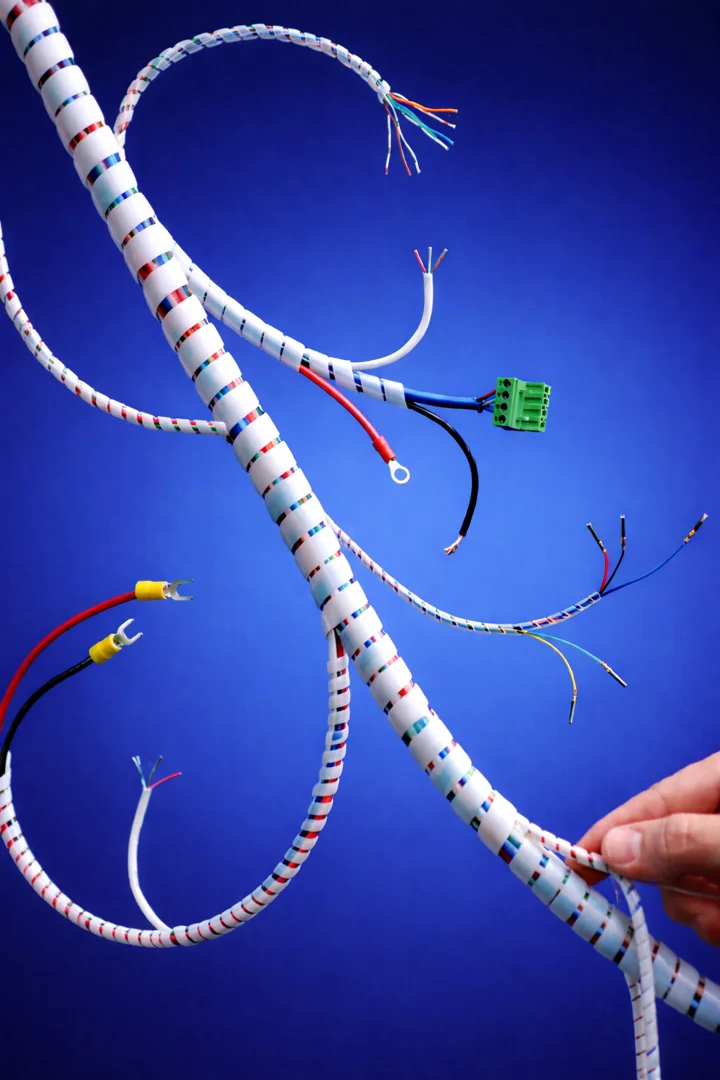
Heli-Tube® spiral cable wrap is a premier solution for protecting aerospace cables. Its unique spiral design allows it to wrap onto wire bundles like tape, but with the added benefit of being reusable and expandable. Unlike solid tubing, the spiral structure permits individual wire breakouts at any point along the run. This is vital in aerospace, where a single harness may need to feed multiple sensors or components in different directions.
Color-Coded Labeling for Identification
In complex systems, color-coding is a lifesaver for maintenance crews. Heli-Tube® spiral wrap is available in a variety of colors, including natural, black, blue, brown, and green. By using specific colors for different systems—such as blue for data lines and orange for high-voltage power—technicians can quickly identify the correct cables, reducing the risk of errors during repair or inspection.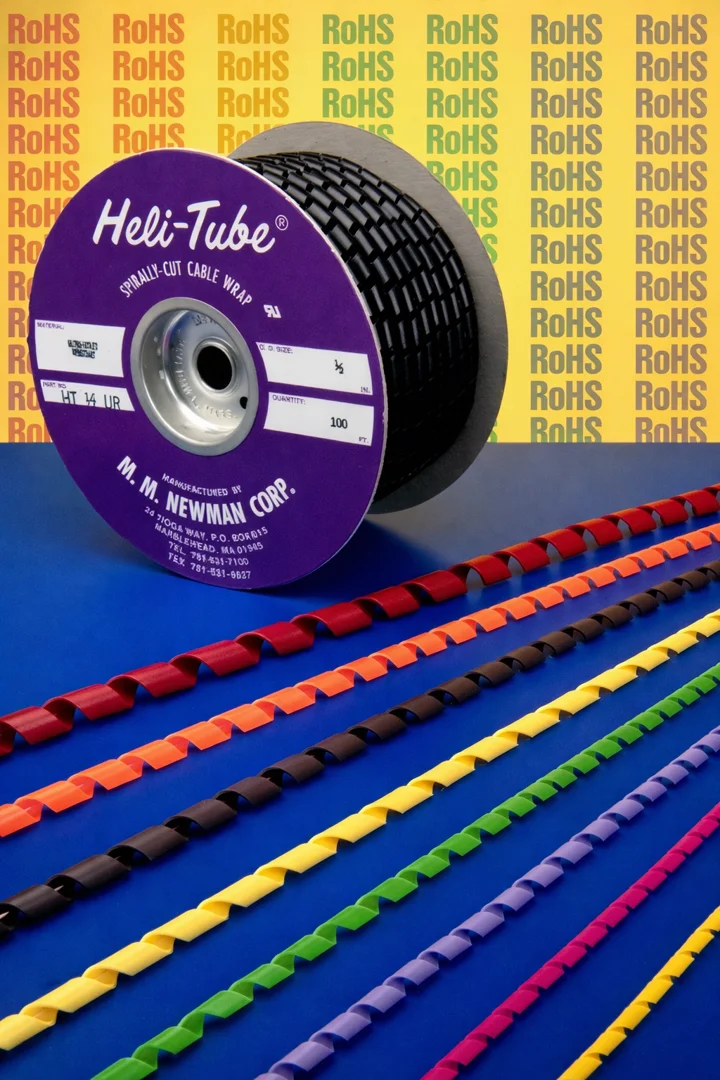
Fire-Resistant Solutions
Safety standards such as FAR Part 25 require that materials in certain areas be fire-resistant. More info about fire-resistant Heli-Tube® spiral wrap details products specifically engineered for applications requiring self-extinguishing properties. These materials help prevent the spread of fire and minimize smoke density, providing precious time for emergency procedures.
Improving Equipment Lifespan
By shielding wires from the mechanical stress of installation and the environmental stress of flight, these protection systems significantly extend the lifespan of onboard equipment. They reduce the frequency of cable replacements and help prevent the “chafing” issues that have historically been a leading cause of electrical failures in older aircraft.
Implementing Heli-Tube® for Aerospace Cable Protection
The practical application of protection materials requires a focus on ease of installation and long-term maintenance.
Routing and Rerouting
Aerospace harnesses are rarely straight lines. They must navigate around airducts, structural supports, and other system components. Heli-Tube® spiral wrap is designed to be easily routed through these complex paths. Because it can be applied or removed without disconnecting the cables, it is a perfect solution for rerouting wires during system upgrades or retrofits.
Forward Cut and Reverse Cut
To accommodate different installation preferences and harness geometries, spiral wrap can be supplied in both forward-cut (right-hand) and reverse-cut (left-hand) configurations. This allows for more natural wrapping directions depending on the harness layout.
Maintenance Efficiency in High-Stakes Industries
In industries such as robotics, automated manufacturing, and public utilities, downtime is costly. In aerospace, it can be catastrophic. The ability to quickly unwrap a section of Heli-Tube® spiral wrap to inspect a wire and then re-wrap it without specialized tools is a major advantage for maintenance efficiency.
Navigating Industry Standards and Regulatory Compliance
Compliance is the backbone of the aerospace industry. Every component must meet rigorous standards to ensure it can survive the flight environment and keep passengers safe.
FAR Part 25 and Fire Safety
The Federal Aviation Regulation (FAR) Part 25 is one of the most critical standards for aircraft materials. it dictates the flammability, smoke density, and toxicity requirements for components used in the aircraft interior. Materials like nylon and fire-resistant Polyethylene are specifically chosen to satisfy these stringent rules.
ISO 9001:2015 and AS9100
Quality management is essential for consistency. M.M. Newman Corporation is ISO 9001:2015 certified, ensuring that every foot of spiral wrap is manufactured to the highest quality standards. While AS9100 is the specific aerospace version of this standard, ISO 9001:2015 provides the foundational quality controls required by major aerospace OEMs.
Environmental Compliance: REACH and RoHS
Modern aerospace cable protection must also be environmentally responsible. Compliance with REACH (Registration, Evaluation, Authorization and Restriction of Chemicals) and RoHS (Restriction of Hazardous Substances) ensures that materials do not contain harmful chemicals that could pose risks to workers or the environment.
MIL-SPEC Requirements
Military applications often require even stricter adherence to performance metrics. More info about aerospace applications often involves materials that meet various Military Specifications (MIL-SPEC), such as A-A-59602 for Nylon spirally cut tubing. Certificates of conformance can be provided to verify that these products meet the necessary defense requirements.
Frequently Asked Questions about Aerospace Cable Protection
What are the temperature limits for PTFE Heli-Tube® spiral wrap?
PTFE offers the most impressive temperature resistance in the lineup. It can operate in environments as cold as -320°F (-200°C) and as hot as +500°F (+260°C). This makes it suitable for the most extreme locations on an aircraft, from the exterior skin to the engine nacelle.
Does Heli-Tube® spiral wrap provide vibratory dampening?
It is important to clarify that while Heli-Tube® spiral wrap is excellent for organizing, insulating, and protecting against abrasion, it does not provide vibration damping. For applications where vibration is a primary concern, engineers should consider specialized damping mounts or braided sleeves designed for that purpose.
How does color-coding improve aerospace maintenance?
Color-coding allows technicians to identify system types at a glance. In an aircraft with miles of identical-looking wires, using different-colored spiral wraps for power, data, and hydraulics prevents “mis-wiring” during repairs and significantly speeds up troubleshooting.
Conclusion
Effective aerospace cable protection is a multi-layered discipline that combines advanced material science with practical organizational strategies. From the extreme heat resistance of PTFE to the lightweight, self-extinguishing properties of nylon, the materials you choose define the safety and reliability of the aircraft.
M.M. Newman Corporation has been a trusted, world-leading supplier of protection solutions since 1956. With a commitment to just-in-time service and products that are Made in the USA, they provide the aerospace industry with the solutions needed to fly safely. Their ISO 9001:2015 certified processes ensure that every product meets the high expectations of the defense and aviation sectors.
For more insights into how these solutions can be applied to your specific project, explore More info about aerospace cable protection solutions on the M.M. Newman Corporation blog. Whether you are working on a commercial airliner, a defense system, or a cutting-edge UAV, the right protection makes all the difference.