

Why Cable Protection for Moving Cables Is Critical to Equipment Lifespan
Cable protection for moving cables is one of the most overlooked factors in industrial equipment reliability – and one of the most costly when ignored.
Here are the most effective solutions for protecting cables in motion:
- Heli-Tube® spiral cable wrap – wraps around cable bundles to resist abrasion, permit individual wire breakouts, and accommodate repeated flexing
- Cable carriers/energy chains – guide and constrain cables along a defined path, limiting bend radius in linear or multi-axis motion
- Corrugated loom tubing – protects against abrasion, heat, and moisture in automotive, marine, and industrial settings
- Cable grommets and strain relief fittings – protect cables at entry and exit points from sharp edges and kinking
- Guide troughs – support longer cable carrier runs (typically over 5 m) to help prevent snagging and wear
Moving cables face a unique set of stresses. Every time a cable flexes, bends, or twists, it accumulates fatigue. Add abrasion from nearby surfaces, exposure to heat, moisture, or chemicals, and the wear compounds fast. The result: premature failures, unplanned downtime, and costly repairs.
In industries like robotics, aerospace, automated manufacturing, and public utilities, protecting cables in motion is not optional – it is a maintenance and safety imperative. In many installations, cable motion is managed alongside components such as cable carriers, edge protection, and strain relief to reduce mechanical stress.
The right protection strategy depends on your specific motion type, environment, and cable bundle composition. This guide walks you through the main considerations, with particular attention to Heli-Tube® spiral cable wrap from M.M. Newman Corporation.
The Dynamic Advantage of Heli-Tube® Spiral Wrap
When machinery is in constant motion, cables are subjected to repeated pulling, twisting, and rubbing. Heli-Tube® spiral cable wrap offers a distinct advantage because it moves with the bundle. Unlike rigid conduits, this spirally cut tubing wraps on like tape, providing a durable outer layer that shields against abrasion while remaining easy to route and reroute.
In automated manufacturing and robotics, cables often move in multiple axes at the same time. Heli-Tube® spiral wrap bundles wires, cables, hoses, and tubing firmly but does not overly restrict the natural movement of the internal components. One of its most important benefits is the ability to permit individual wire breakouts at any point along the run. If a single sensor wire needs to exit the main bundle to reach a specific component, it can pass out between the spirals without compromising protection for the rest of the bundle.
Furthermore, this product is reusable. If a cable fails or a system needs an upgrade, the wrap can be removed and reapplied quickly, reducing waste and saving maintenance time. By preventing direct contact between cables and the sharp edges of machinery, it helps extend equipment lifespan and reduce the likelihood of insulation wear. In properly designed systems, Heli-Tube® spiral wrap also helps organize moving bundles, but it should not be treated as a substitute for proper strain relief, cable support, or bend-radius management.
Sizing Heli-Tube® Spiral Wrap for Optimal Performance
Selecting the right size for moving cable protection is an engineering decision, not a guess. Because Heli-Tube® spiral wrap is expandable, a single size can cover a range of bundle diameters. However, the fit must be “just right” to ensure the cables don’t slide around inside or become too constricted.
A general rule of thumb for any moving cable application is to respect the minimum bend radius. For most cables and hoses, the minimum bend radius should be 8 to 10 times the outer diameter of the largest cable in the bundle. If the spiral wrap is too tight, it can force the cables into a tighter bend than they are rated for, leading to internal copper fatigue.
When calculating the size you need, consider the following:
- Bundle Outer Diameter (OD): Measure the total diameter of all cables and hoses when held together.
- Expansion Range: Check the specifications of the Heli-Tube® spiral wrap to ensure your bundle OD falls within its recommended range.
- Clearance: For high-speed motion, it is often wise to leave a small amount of “breathing room” within the bundle to prevent friction between individual wires.
For a deeper dive into organizing your workspace, check out The Ultimate Guide to Cable Management.
Key Considerations for Heli-Tube® Spiral Wrap Applications
Beyond just picking a size, successful cable protection for moving cables requires looking at how the bundle interacts with the machine. A common issue in dynamic applications is “corkscrewing,” where cables twist around each other until they knot or fail. Properly applied spiral wrap helps prevent this by keeping the cables in a fixed relative position while still allowing the entire bundle to flex.
Strain relief is another critical factor. Even the best spiral wrap can’t save a cable if it is being pulled out of its connector at the end of its travel. It is vital to secure the ends of the Heli-Tube® spiral wrap bundle to a fixed point on the machinery using mounting brackets or clamps. This ensures that the mechanical stress of the motion is taken up by the wrap and the mounting hardware, rather than the electrical pins.
The ease of application is a major reason why industries like public utilities and aerospace rely on this solution. It can be applied to existing installations without disconnecting any wires, which is a massive advantage for retrofitting older equipment. To learn more about the specifics of installation, see How to Use Spiral Wrapping Bands for Cable Management.
Specialized Materials for Harsh Environments
Not all environments are created equal. A robotic arm in a cleanroom faces different challenges than a hydraulic hose on a sea-bound vessel. M.M. Newman Corporation manufactures Heli-Tube® spiral wrap in several technical materials to meet these diverse needs:
- Polyethylene: The standard for general industrial use. It is cost-effective and durable. Maximum operating temperature is 190°F (88°C), and minimum is -76°F (-60°C). For outdoor applications, ultraviolet-resistant black Polyethylene is essential, as it features UV-absorbing properties that help prevent the material from becoming brittle in direct sunlight.
- Nylon: This material is a strong choice for abrasion resistance. It is self-extinguishing and does not produce toxic or irritating byproducts when exposed to open flame or excessive operating temperatures. Maximum operating temperature is 250°F (121°C), and minimum is -40°F (-40°C). It is frequently used in enclosed environments.
- PTFE: When temperatures get extreme, PTFE is the answer. With an operating range from -320°F to +500°F, it is chemically inert and non-flammable, with a flammability rating of UL VW-1 and meets ASTM D-3295 Group 4. It is a preferred option for aerospace and laboratory environments where corrosive chemicals or high heat are present.
- Fire-Resistant Polyethylene: Suitable for applications requiring a self-extinguishing material. Maximum operating temperature is 176°F (80°C), and minimum is -4°F (-20°C). Available in White or Black.
All temperature ratings are to be used as guidelines only. These Heli-Tube® spiral wrap materials support demanding applications in aerospace, robotics, automated manufacturing, marine equipment, and public utilities. M.M. Newman Corporation is ISO 9001:2015 certified, and these materials are REACH and RoHS compliant. Heli-Tube® spiral wrap is also a UL recognized component listed under category UZKX2, Component Wire Positioning Devices. To help you decide, you can Find the Right Spiral Wrap Material for your specific industry requirements.
Maximizing Lifespan with Heli-Tube® Spiral Wrap
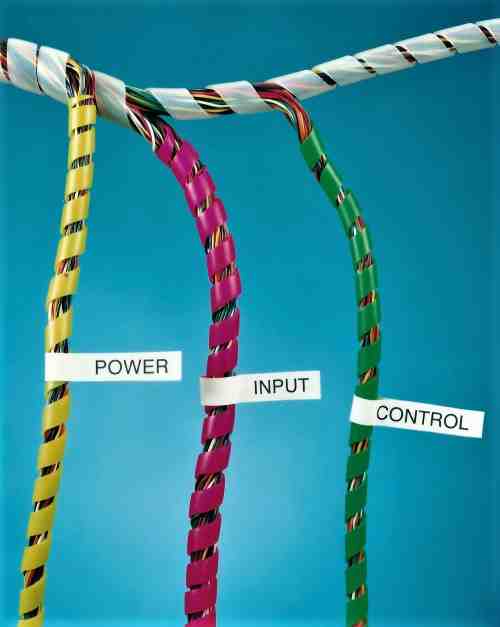
To get the most out of your cable protection for moving cables, take advantage of the customization options available. For instance, color-coded labeling is an effective way to identify different systems, such as pneumatic versus electrical, at a glance. Heli-Tube® spiral wrap is available in a wide variety of colors and sizes, which simplifies troubleshooting, maintenance, and bundle standardization across equipment. Custom specifications are also available – M.M. Newman Corporation can alter pitch, diameter, wall thickness, color, packaging, length, or material to meet your requirements.
Another technical detail to consider is the cut of the spiral. It can be supplied in both forward cut and reverse cut. This allows engineers to wrap multiple layers in opposing directions if extra abrasion protection is needed, or simply to match the natural lay of a large cable bundle. By shielding cables from the constant sawing action of moving parts, you reduce the risk of insulation breach and unplanned downtime.
Best Practices for Heli-Tube® Spiral Wrap
Even durable systems require routine attention. Here are best practices for maintaining your cable protection:
- Regular Inspection: During scheduled maintenance, check the wrap for signs of excessive wear or whitening, which can indicate high-stress points.
- Verify Strain Relief: Ensure that the clamps holding the bundle are still tight and that the cables have not shifted.
- Check for Debris: In environments like woodworking or metal machining, ensure that chips have not become embedded in the spirals, as this can cause internal abrasion.
- Edge Protection: While the wrap protects the cables, ensure the holes the bundle passes through are equipped with grommets or edge protection to help prevent the wrap itself from being cut over time.
For more tips on keeping operations running smoothly, read Avoid Downtime: Spiral Cable Wrap.
Frequently Asked Questions about Cable Protection
How do I select the correct size of Heli-Tube® spiral wrap for my application?
Measure the outside diameter of your cable bundle and choose a spiral wrap size with a listed range that includes that diameter. It is usually better to choose a size where your bundle is in the middle of the range to allow for the best balance of grip and flexibility.
What are the benefits of using Heli-Tube® spiral wrap for individual wire breakouts?
Unlike solid tubing or heat shrink, the spiral design allows any wire or hose to exit the bundle at any point. This is crucial for complex machinery where sensors and actuators are spread out along a moving arm. It keeps the main run organized while allowing for precise routing to individual components.
Can Heli-Tube® spiral wrap be reused after installation?
Yes! One of the biggest advantages of Heli-Tube® spiral wrap is its reusability. It can be unwrapped and re-wrapped as many times as needed. This makes it an ideal solution for prototyping or for systems that require frequent cable replacements or additions.
Conclusion
Protecting cables in motion requires the right materials and the right design. Since 1956, M.M. Newman Corporation has been a world-leading supplier of Heli-Tube® spiral cable wrap, helping aerospace, robotics, public utilities, marine, and manufacturing operations reduce downtime and extend equipment life.
Whether you need the high-temperature performance of PTFE, the abrasion resistance of Nylon 66, or the UV protection of specialized Polyethylene, there is a Heli-Tube® option suited to the application. Made in the USA and backed by ISO 9001:2015 certification, these products are designed for demanding cable, hose, and tubing management requirements.
Invest in quality protection today to help keep machinery operating safely and reliably for years to come.