

Made in the USA
Automotive and Transportation Composites
Cable and Hose Protection with Heli-Tube® Spiral Cable Wrap
Automotive and transportation composite manufacturing environments combine high-volume production, automated assembly systems, and advanced composite manufacturing processes that place significant demands on cables, hoses, and robotic cable assemblies. Abrasion from continuous automated motion, chemical exposure during composite layup, and the thermal and mechanical stress of production operations accelerate wear in unprotected cable and hose systems.
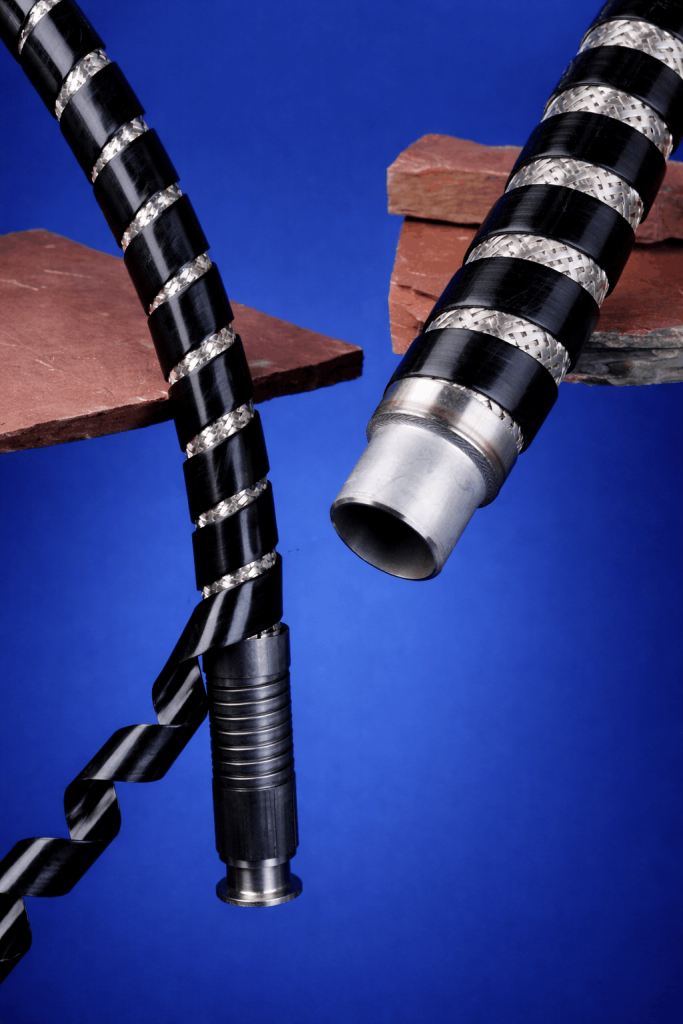
M.M. Newman Corporation’s Heli-Tube® spiral cable wrap is used throughout automotive and transportation composites applications to protect and organize cables, hoses, and robotic cable assemblies in automated manufacturing systems and composite production environments.
Challenges in Automotive and Transportation Composites Environments
Automotive composite manufacturing and transportation systems create demanding conditions for cable and hose management. Common challenges include:
-
Abrasion on robotic and automation cable assemblies from continuous high-cycle motion
-
Chemical exposure to resins, solvents, and processing agents during composite manufacturing
-
Thermal stress from elevated curing temperatures and high-heat production environments
-
Complex cable routing through automated cells, robotic arms, and manufacturing fixtures
-
High production throughput requirements that increase wear rates on cable and hose systems
-
Maintenance access limitations in dense automation environments with tightly routed assemblies
These conditions reduce cable and hose service life and can create unplanned downtime in high-production automotive and transportation manufacturing operations.
Shop Automotive Cable Wrap
Heli-Tube® Spiral Cable Wrap options are designed to protect cables, hoses, and tubing across automotive composite manufacturing and transportation systems while supporting organized, serviceable routing in high-cycle automation environments.
Applications of Heli-Tube® in Automotive and Transportation Composites
Heli-Tube® spiral cable wrap supports a wide range of automotive composite manufacturing and transportation system applications:
Robotic and Automation Cable Management
-
Protects cables and hoses on robotic arms, gantries, and automated assembly cells
-
Reduces abrasion at high-motion contact points throughout high-cycle automation systems
-
Organizes multi-cable assemblies to reduce tangle, snag, and wear in continuous-motion applications
-
Allows individual line breakouts for connections at end-of-arm tooling and system junctions
Composite Automotive Part Manufacturing
-
Used in resin infusion and vacuum infusion processes for composite automotive structure production
-
Supports resin flow management and vacuum line organization across composite layup fixtures
-
Protects tubing and hoses during resin transfer molding and composite curing operations
-
Helps maintain production consistency across high-volume composite part manufacturing cycles
General Manufacturing and Assembly Lines
-
Protects cable bundles running through manufacturing cells, conveyor systems, and assembly stations
-
Organizes power, data, and pneumatic lines across complex multi-station production environments
-
Supports serviceability during scheduled maintenance and production line changeovers
-
Available in multiple sizes to accommodate diverse cable and hose bundle configurations
Transportation System Cable and Hose Protection
Why Heli-Tube® Performs in Automotive and Transportation Composites Applications
-
Resists abrasion in high-cycle automation environments where cable contact is continuous
-
Flexible construction accommodates the full range of motion in robotic cable assemblies
-
Permits breakouts at any point for connection access in dense automation configurations
-
Chemical-resistant material options support performance in composite manufacturing environments
-
Wraps on and off quickly to reduce maintenance and changeover time in production settings
-
Reusable design supports repeated removal and reapplication during system maintenance
Material Options for Automotive and Composites Conditions
Heli-Tube® spiral cable wrap is available in materials suited for automotive composite manufacturing and transportation environments:
Polyethylene
Suitable for general manufacturing applications including composite layup environments with moderate chemical exposure
Nylon
Higher abrasion and temperature resistance for robotic and automation cable assemblies subject to continuous high-cycle motion and elevated operating temperatures
PTFE
Chemically inert with a broad operating temperature range for demanding composite process environments with elevated resin system or solvent exposure
Each option supports long-term performance based on application conditions, chemical environment, and mechanical demand.
Why Choose M.M. Newman Corporation for Automotive and Transportation Composites
Automotive and transportation composite manufacturing requires cable and hose protection that keeps pace with high-volume production cycles and demanding automation environments. Heli-Tube® spiral cable wrap helps extend the service life of robotic cable assemblies, composite process lines, and manufacturing system hoses while maintaining organized, serviceable routing that supports production efficiency.
From automated manufacturing cells and composite part production to transportation system assemblies, Heli-Tube® contributes to reliable system performance and reduced maintenance frequency. M.M. Newman Corporation delivers cable management solutions engineered for the throughput demands and operating conditions of automotive and transportation composites manufacturing.
FAQs
Heli-Tube® is used to protect and organize robotic cable assemblies, automation system hoses, and manufacturing cell wiring throughout automotive and transportation composites production. It reduces abrasion in high-cycle motion environments, supports organized cable routing, and allows individual line breakouts for maintenance and system connection access.
Heli-Tube® is available in chemical-resistant material options, including PTFE, which is suited for environments with resin system exposure and solvent contact. The appropriate material selection depends on the specific chemicals and process conditions present in the application.
Yes. Heli-Tube® spiral cable wrap is designed for high-abrasion environments, including the continuous motion and high-cycle demands of robotic and automation cable applications. Its flexible spiral construction accommodates cable movement while providing consistent abrasion protection throughout the assembly.
Yes. Heli-Tube® is used in resin infusion and vacuum infusion processes for composite automotive part production. It supports resin flow management, vacuum line organization, and tubing protection during layup and curing operations.
Heli-Tube® is available in a wide range of diameters to accommodate small signal wiring through large multi-hose automation assemblies. Custom configurations can be produced to meet specific routing dimensions and production requirements.