


Why Spiral Cable Wrap Size Matters for Equipment Protection
Spiral cable wrap size is determined by the inside diameter (I.D.) of the wrap — and choosing the right one depends on the outer diameter of your cable or hose bundle.
Here is a quick reference for common sizes of the Polyethylene Spiral Wrap
| Outside Diameter (O.D.) | Inside Diameter (I.D.) | Typical Bundle Range |
|---|---|---|
| 1/8″ | 0.061″ | Small single cables |
| 1/4″ | 0.160″ | Light multi-wire bundles |
| 1/2″ | 0.376″ | Medium harnesses |
| 3/4″ | 0.620″ | Larger hose groups |
| 1″ | 0.840″ | Heavy cable runs |
| 1.5″ | 1.30″ | Large industrial bundles |
The general rule: measure the outer diameter of your bundle, then select a Heli-Tube® size with a slightly smaller I.D. This keeps the wrap snug and prevents it from slipping.
The Spiral Wrap sizes can work on a bundle range from 1/16″ up to bundles as large as 7″ in diameter, covering everything from a single pneumatic tube in a robotics arm to a large hose cluster on industrial machinery.
Getting the size wrong has real consequences. Too large, and the wrap slides off or leaves cables exposed. Too small, and you cannot accommodate the full bundle — or future cables added during maintenance.
In aerospace, automated manufacturing, public utilities, and marine environments, unprotected or poorly wrapped cables are a leading cause of abrasion damage and unplanned downtime. The right Heli-Tube® size keeps equipment running longer and makes maintenance access faster, because the spiral design allows individual wire breakouts at any point along the run — without unwrapping the entire bundle.
This guide walks you through exactly how to measure, select, and apply the correct size for your application.
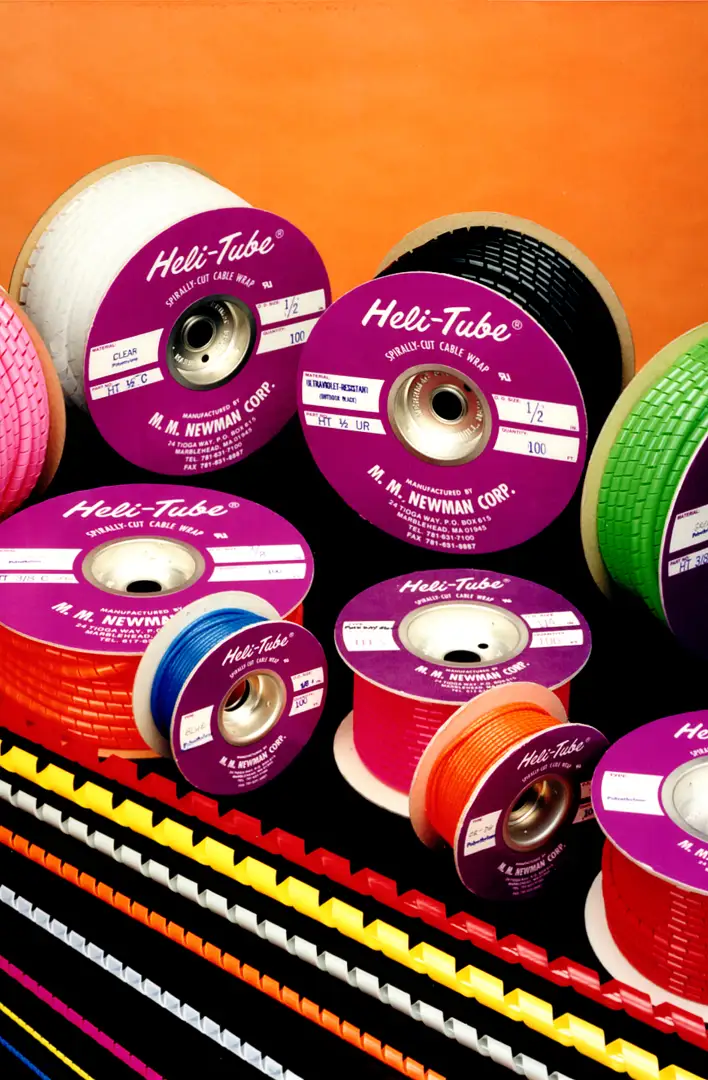
Measuring for the Correct Spiral Cable Wrap Size
Selecting the appropriate spiral cable wrap size is a technical process that requires precision to ensure maximum equipment lifespan. When a technician evaluates a bundle of wires or pneumatic hoses, they must look beyond the immediate aesthetics and focus on the mechanical security of the wrap. M.M. Newman Corporation provides the ultimate guide to choosing spiral cable wrap to help professionals navigate these specifications.
The selection process involves four primary measurements:
- Inside Diameter (I.D.) of the Spiral Wrap: This is the measurement of the interior of the spiral wrap in its relaxed state. As a rule of thumb, the I.D. of the wrap should be smaller than the outside diameter of the bundle it is intended to protect.
- Outside Diameter (O.D.) of the Spiral Wrap: This represents the total width of the wrap including the wall thickness. This is a critical measurement when routing bundles through tight spaces in aerospace or robotics enclosures.
- Bundle Range: Every spiral cable wrap size has a minimum and maximum expansion capability. For example, a 1-inch wrap may have a bundle range that expands up to 7 inches. However, staying within the “optimal” range ensures the best balance of protection and coverage.
- Pitch: This refers to the distance between the spirals. A wider pitch provides more surface area protection against abrasion, while a tighter pitch allows for greater ease when performing individual wire breakouts.
When professionals consider 3 factors to consider when choosing spiral cable wrap, sizing is always at the top of the list because it dictates the tension of the application.
How to determine the right spiral cable wrap size for your bundle
To find the perfect fit, one must first determine the total outside diameter of the bundle. If the bundle consists of multiple cables of varying sizes, it is best to hold them together as they will be installed and use a caliper or a diameter tape to get an accurate reading.
Once the bundle diameter is known, choose a Heli-Tube® size where the I.D. is slightly smaller than the bundle. This creates a “memory” grip where the material naturally wants to return to its original shape, exerting a constant, snug pressure on the cables. This prevents the wrap from sliding during the movement of robotic arms or the vibrations found in public utility vehicles.
Understanding spiral cable wrap sizes materials is also essential because different materials have different expansion limits.
Maximum bundle diameter for a specific spiral cable wrap size
The expansion ratio of Heli-Tube® is one of its most versatile features. Unlike fixed-diameter tubing, spiral wrap can accommodate a wide range of diameters. For instance, common polyethylene wraps can expand significantly:
- 1/8″ I.D.: Can often bundle items from 1/8″ up to 1/2″.
- 1/2″ I.D.: Can protect bundles ranging from 1/2″ to 4 1/2″.
- 1″ I.D.: Capable of covering massive bundles up to 8″ in diameter.
Material Properties and Performance Standards
The performance of a specific spiral cable wrap size is heavily influenced by the material from which it is manufactured. In industrial workplaces, the environment dictates whether a technician should reach for PTFE, Nylon, or Polyethylene.
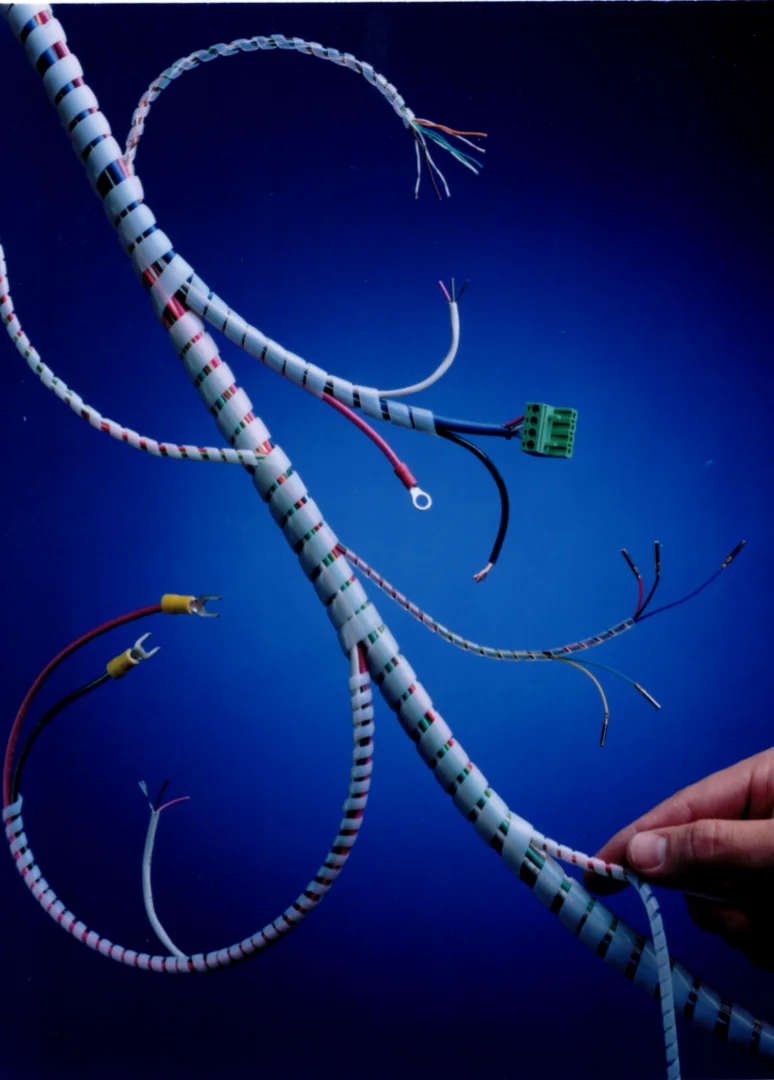
High-Performance Polymers
When dealing with extreme conditions, scientific research on high-performance polymers highlights why material selection is as important as sizing.
- PTFE (Polytetrafluoroethylene): This material is the gold standard for extreme temperature ranges, operating effectively from -320°F to +500°F. It is chemically inert and offers the highest level of lubricity, which is vital in aerospace applications where cables might rub against airframe components.
- Nylon: Frequently used in enclosed spaces like engine compartments or robotics control cabinets, Nylon is self-extinguishing and heat-stabilized. It performs well in temperatures ranging from -40°F to 250°F.
- Polyethylene: This is the most common material for general industrial and outdoor use. It is available in natural, colors, and UV-resistant black. Black polyethylene contains a UV absorber that prevents the material from becoming brittle when exposed to direct sunlight for extended periods.
Compliance and Quality Standards
M.M. Newman Corporation ensures that Heli-Tube® meets rigorous international standards. This is critical for industries like automated manufacturing and public utilities where safety and reliability are non-negotiable.
- ISO 9001:2015: Ensures consistent quality management systems are in place during manufacturing.
- REACH and RoHS: Compliance with these regulations ensures that the materials are free from hazardous substances, making them safe for global distribution and use in sensitive electronics.
- UL Listed: Heli-Tube® materials are UL Listed to ensure their physical properties, such as tensile strength and flammability ratings.
To ensure you are matching the right environmental protection with your bundle, you can find the right spiral wrap material by reviewing the specific resistance charts for chemicals and fuels.
Industry-Specific Sizing for Aerospace and Robotics
In specialized sectors, the requirements for spiral cable wrap size often go beyond simple bundling. These industries require solutions that reduce downtime and extend the lifespan of complex systems.
Aerospace and Public Utilities
In aerospace, weight and precision are everything. Technicians often use smaller nominal sizes of PTFE Heli-Tube® to bundle high-density wiring harnesses. The ability to have individual wire breakouts is a significant advantage here; a single sensor wire can exit the bundle exactly where it needs to connect to a terminal, while the rest of the harness continues to its destination. This eliminates the need for complex “Y” junctions or specialized connectors.
Public utilities often use color-coded labeling with spiral wrap to identify different systems—such as hydraulic lines versus electrical control wires—within the same maintenance access panel. This organization is key to reducing the time required for repairs.
Robotics and Automated Manufacturing
Robotics presents a unique challenge: constant motion. As a robotic arm articulates, the cables and pneumatic tubes inside are subjected to repeated bending and friction. A spiral wrap that is sized too tightly may restrict movement, while one that is too loose will not provide adequate abrasion protection.
In these environments, using the right spiral wrap material for your application ensures that the wrap can withstand millions of cycles without losing its grip or wearing through. The spiral design is preferred over solid sleeves because it does not trap moisture or heat, which can degrade cable insulation over time.
Marine and Boat Manufacturing
In boat manufacturing, Heli-Tube® is used to protect hoses and wiring from the harsh marine environment. Saltwater, fuel exposure, and constant vibration can quickly destroy unprotected lines. By selecting a UV-resistant polyethylene or a chemical-resistant Nylon in the correct spiral cable wrap size, manufacturers can ensure that the critical systems of a vessel remain operational for years.
Installation Best Practices for Equipment Longevity
Correct installation is the final step in ensuring that the chosen spiral cable wrap size performs as intended. While the process is straightforward and requires no specialized tools, attention to detail can significantly impact the durability of the protection.
Wrapping Techniques
A technician should start by cleaning and straightening the cables or hoses in the bundle. Starting at one end, the Heli-Tube® is wound around the bundle like tape. The tension should be consistent—snug enough that the wrap does not move, but not so tight that it pinches the cables.
The pitch spacing is a critical variable. For applications requiring maximum abrasion protection, the spirals should be wrapped closely together with minimal gaps. For applications where flexibility is the priority, such as a moving robotic joint, a wider pitch is more effective.
Maintenance and Modifications
One of the greatest benefits of the spiral design is the ease of maintenance. If a wire within a bundle fails, it can be traced and removed by simply unwinding a small section of the wrap or pulling the wire through the spiral gap. New wires can be added to an existing bundle just as easily. This versatility is a major factor in reduced downtime for industrial facilities.
Conclusion
Choosing the correct spiral cable wrap size is a fundamental aspect of professional cable management. By understanding the relationship between I.D. and bundle range, and by selecting materials like PTFE or Nylon that match the environmental demands, industries can significantly improve the reliability of their equipment.
Since 1956, M.M. Newman Corporation has been the world-leading supplier of Heli-Tube® spiral cable wrap. Their commitment to quality is backed by ISO 9001:2015 certification and compliance with REACH and RoHS standards and UL. Whether it is protecting a delicate aerospace harness or a rugged industrial hose bundle, M.M. Newman Corporation provides the sizes and materials necessary for any application, delivered with efficient, just-in-time service.
To find the perfect fit for your next project, Explore Heli-Tube® Spiral Wrap Sizes and ensure your equipment is protected by the industry standard.